
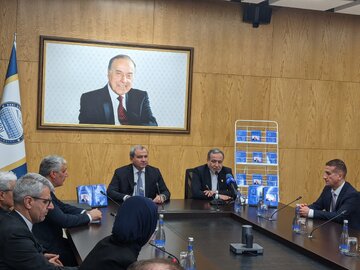
According to KhabarOnline, an Iranian News Agency, Araghchi explained that “the power of negotiation” rests on three pillars: the inherent capability a country needs to enter negotiations, the power a negotiator requires during the process, and the capacity that negotiations themselves can generate for a nation. He stressed that a negotiator succeeds only when backed by the full spectrum of national power—political, economic, military, cultural, media, and ideological.
Criticizing current global trends, the foreign minister noted that international norms are weakening day by day, and instead of promoting peace through diplomacy, some major powers increasingly rely on force. “When confronted with powers that wage war wherever they choose, states are compelled to continually strengthen their deterrent capabilities,” he said. “Some governments are steering the world toward a law-of-the-jungle environment.”
Araghchi then referred to the “12-day war waged by the United States and Israel against Iran,” noting that a new chapter on this episode has been added to his book. According to him, Iran’s armed forces and its diplomatic corps operated in parallel during this period, ultimately forcing the adversaries to retreat.
Recounting the 2025 negotiations, Araghchi said the joint U.S.–Israeli attack—launched two days before a planned round of talks—amounted to “the first missile fired at the negotiating table.” He added: “In the midst of war, they sent messages calling for negotiations. Our response was clear: you initiated the attack; stop it, and we will return to the talks.” He stated that despite the pressure, Iran chose to resist in order to demonstrate that war cannot be a path to political gains.
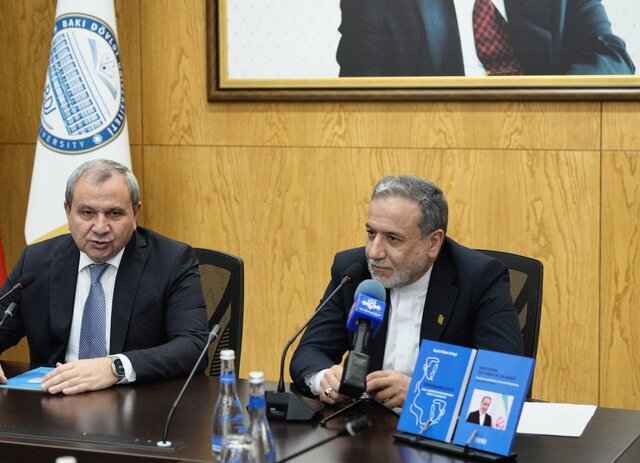
“While the U.S. president was calling for unconditional surrender, Iran’s resistance and continued missile strikes were so decisive that Washington ultimately sent a message accepting an unconditional ceasefire,” Araghchi said.
He emphasized that when the dignity and honor of a nation are threatened, standing firm is essential—just as Azerbaijan fought to reclaim its territories and negotiated when the time for peace arrived.
Araghchi concluded by highlighting his meeting with the President of Azerbaijan, describing bilateral relations as highly important for Iran. He noted that both sides agreed to continue their talks and maintain a constructive approach to cooperation.
Your Comment