
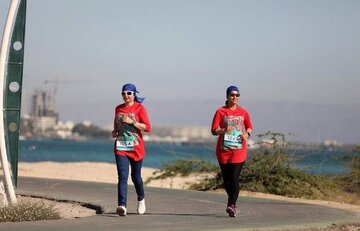
Reyhane Hejazi - In the early hours of the controversy, some media activists posted comparison photos from this year’s marathon and previous editions, accusing authorities of “double standards.” Ali Mojtahedzadeh, a media commentator, shared images from the 2023 race and this year’s event, asking: “Judicial officials must explain what difference they see in women’s clothing at these two events—why did they remain silent in the first and file criminal charges in the second?” His question triggered a new wave of debate about the selective enforcement of laws on Kish.
Under the Islamic Republic’s current legal framework, failure to observe mandatory hijab in public spaces constitutes a legal violation.
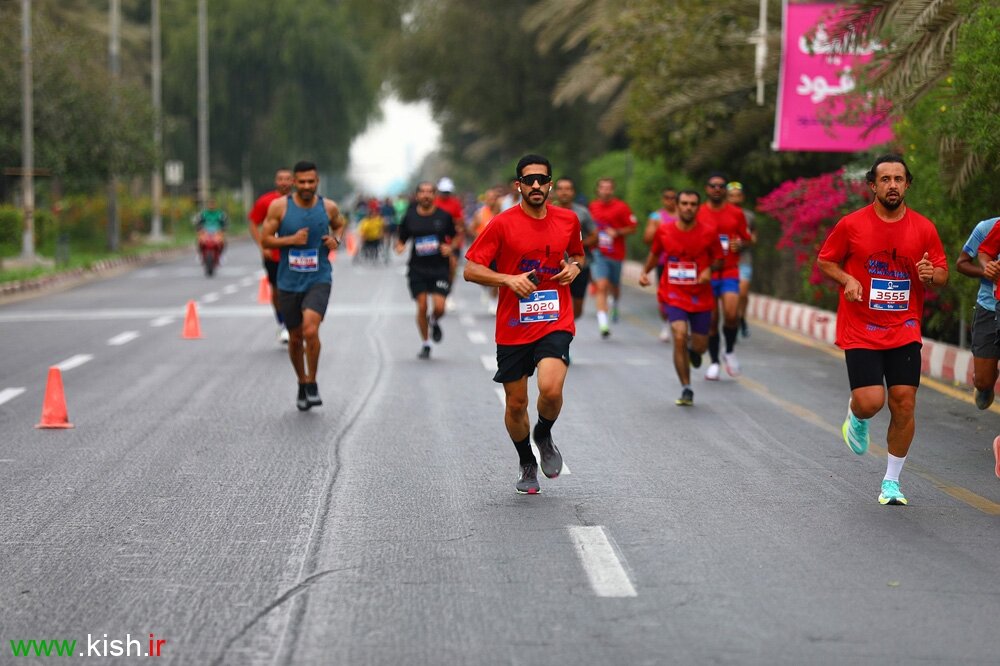
The Kish Marathon itself is not new. It was held for the first time in an organized form in 2021, and intermittently between 2016 and 2018. Images from past editions also showed similar attire among some participants, yet those instances drew little public reaction. What changed this year was not the race but Iran’s social climate: after two years of intensified tensions around the issue of hijab, society has become far more sensitive to any symbolic imagery. What once went largely unnoticed can now spark anger, judgment, and polarized reactions.
Conversely, another group of social-media users offered a different narrative. Some claimed that “the scenes were ordinary” and that a handful of images had been “exaggerated.” Opponents of this view responded with more photos of female runners, arguing that “such clothing is never normal” and describing the event as “an insult to social values.”
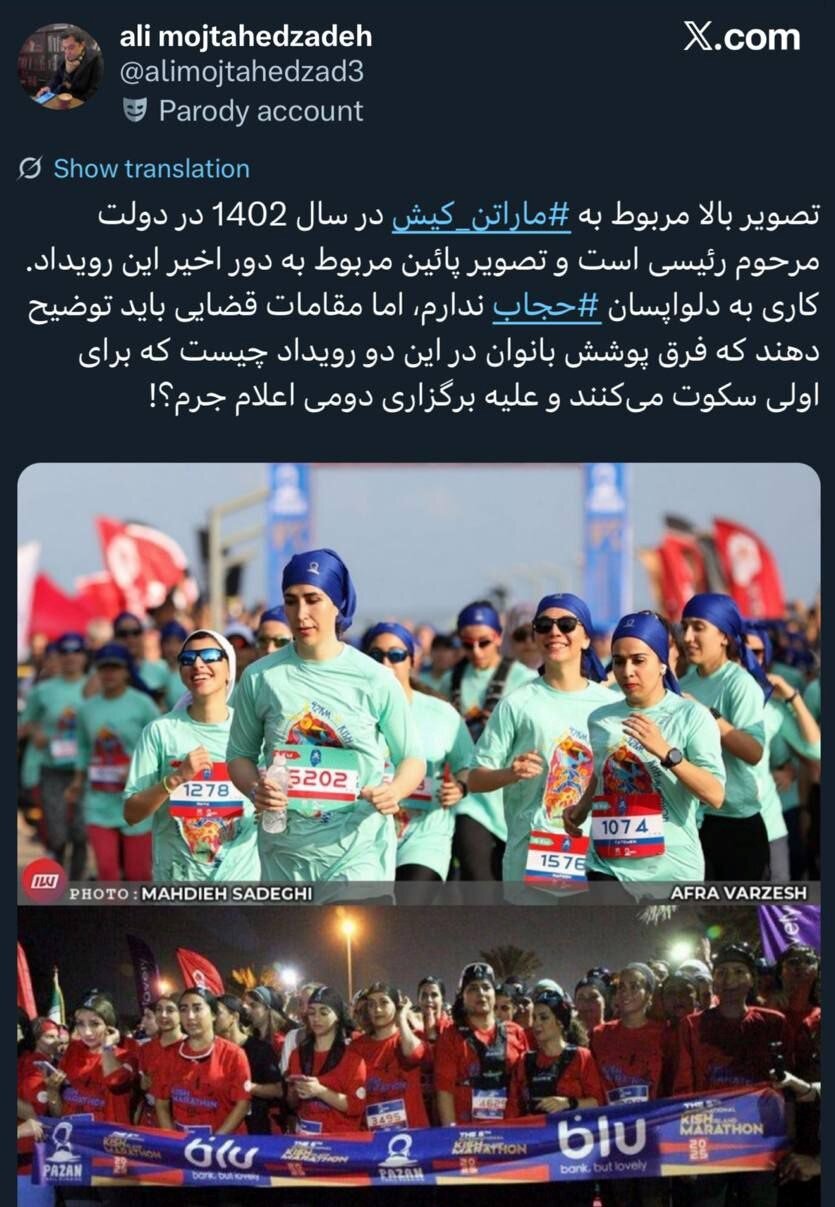
One user wrote: “They say the Kish Marathon had nothing unusual and the scenes were normal. I don’t understand why every photo circulating on Twitter shows women whose clothing is anything but normal. Apparently showing midriffs has become so common that some people find this kind of indecent dress unremarkable.”
Kish, located in the Persian Gulf in southern Iran, is one of the country’s most important free-trade zones—an island designed not to promote local cultural norms but to attract investment, tourism, and foreign currency. This mission has created a social environment unlike most Iranian cities: short-term tourists, migrant labor, a limited foreign presence, and a lifestyle centered on leisure and consumption.
In such a setting, enforcement of hijab has long been ambiguous—neither implemented as strictly as in religious cities nor openly relaxed. As a result, the rate of unveiled women on Kish has consistently been higher than the national average, a longstanding reality that only occasionally surfaced in the news.
Some religious figures framed the issue as “more than a simple dress-code violation.” The Friday Prayer leader of Parsian referred to the event as a “coordinated marathon of nudity” and urged a firm judicial response—a characterization that itself triggered fresh debate and criticism.
Khorasan newspaper, a conservative outlet, took a different position. It noted that in an “international-standard event along a scenic, high-quality route,” only “a handful of marginal images” had been highlighted; however, it warned that such behavior could disrupt the “fragile equilibrium” of public dress norms and “create challenges for national cohesion.”

Official Policy: Laws Exist, Strategy Does Not
In recent months, the state’s approach to hijab enforcement has entered an ambiguous phase: neither a full return to the heavy-handed tactics of the 2010s nor a shift toward genuine social liberalization. The current model focuses less on broad public control and more on case-by-case action against “organizers” and “public venues.”
This is the same pattern that has led in recent months to the sealing of several cafés, music performances, public programs, and even tourist camps. These punitive measures have neither altered social behavior nor provided a clear policy message. The result is a form of symbolic punishment—sanctioning the site of the incident rather than addressing the underlying issue.
Within this framework, some conservative-leaning analysts sought a broader interpretation. Hamid Kasiri, a media activist, argued that the controversy should not be reduced to “a few norm-breaking photos” and saw it instead as a sign of a “shift in the meaning of public space and a gradual drift toward hidden secularism.”
The Marathon and the Judicial Case
Following the uproar, the Kish Prosecutor’s Office announced that two key organizers had been arrested: a senior official from the Free Zone Authority and a representative of the private company managing the event. Both were released on bail after being formally charged. The government official was suspended, and the private organizer was barred from further sports-related activities.
Several members of parliament demanded harsher action, but for now the judicial process remains limited—an approach that underscores a clear pattern: containing the symptoms of the issue rather than confronting its roots.
Beyond Kish: A National Issue
The Kish Marathon controversy is more than a cultural spat. It encapsulates a broader crisis in Iran’s domestic politics: the widening gap between the state’s “official cultural order” and the actual lived experience of segments of society, particularly in leisure-driven and tourist environments.
This tension is not unique to Kish; it is visible in the northern beaches, Tehran’s cafés, concerts, and online spaces. What makes Kish distinctive is that these contradictions converge in one place: a semi-liberalized economy, Iran’s consumer-tourism face, and a cultural governance model that has yet to articulate rules for such environments.
Moreover, this crisis is unfolding amid external pressure: escalating tensions with the United States, conflict with Israel, stalled nuclear negotiations, and the activation of the snapback mechanism. Iran is facing multilayered stress—both external and internal.
Under such circumstances, even minor cultural disputes quickly become entangled with larger political dynamics. Domestic social fissures make foreign-policy maneuvering more difficult.
In Tehran, officials are keen to avoid letting cultural rows evolve into broader instability; hence the relatively restrained tone of reactions and the preference for isolated punitive measures over systemic policy shifts—a strategy that satisfies neither public sentiment nor institutional clarity.
The marathon scandal has now passed: a few suspensions, a few legal cases, and the wave of social-media reactions has subsided. But the underlying question remains:
Is Iran prepared to define a new cultural framework for its emerging tourist and lifestyle spaces? Or will each episode continue to be managed through temporary backlash, venue closures, and sporadic judicial cases?
Kish is not an exception; it is a sign of what lies ahead—a place where law and society must eventually reach an accommodation, or where their gap will repeatedly erupt into new controversies.
Your Comment