
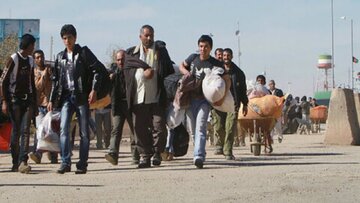
According to KhabarOnline, an Iranian News Agency, Amrollah Shamghadri, Deputy for Security and Law Enforcement Affairs at the Governor General’s Office of Khorasan Razavi Province, said that part of the departures involved Afghan residents of the province, while the rest consisted of individuals transferred from 11 other provinces across Iran to exit via the Dogharoun crossing. According to him, the peak occurred during the period known as the “12-day war,” when regional tensions fueled an accelerated wave of departures. In recent months, this trend has moderated into what he described as a steady and manageable flow.
Shamghadri emphasized that the reduction in migratory pressure has enabled more effective planning in security management, employment policy, urban services, and border control. Official assessments indicate that the impact of the mass departures on the labor market, municipal services, and security conditions has remained limited, estimated at around 10 percent — far below earlier concerns of potential labor shortages or social disruption.
Authorities have also underscored a shift in policy away from focusing solely on restricting irregular migration toward harnessing the economic potential of legally resident foreign nationals. Shamghadri noted that many Afghans have lived in Iran for more than three decades and their capital is already integrated into the domestic economic cycle. A newly launched private-sector digital platform now registers and monitors Afghan employment and investment in a centralized database, promoting formalization and regulatory oversight rather than uncontrolled labor inflows.
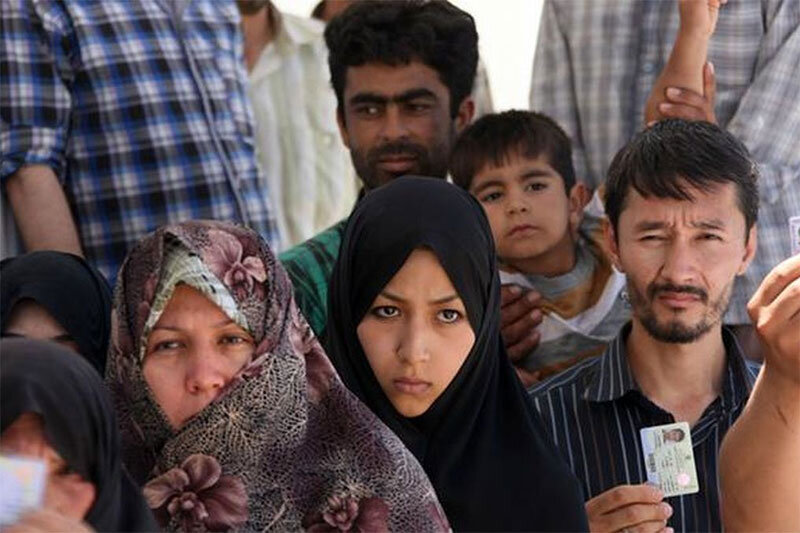
On border security, officials reported that approximately 50 percent of the planned physical fencing and wall construction along the Iran–Afghanistan border has been completed. The project is supported by advanced surveillance infrastructure, including border patrol posts, thermal cameras, night-vision equipment, watch towers, and other monitoring technologies designed to curb illegal crossings and enhance operational control.
Meanwhile, an Afghan delegation is expected to visit the region to address ongoing border issues and improve bilateral coordination. Iranian officials estimate that full completion of the border-wall project will take about three years, contingent upon sustained cooperation between Tehran and Kabul.
Overall, Iranian authorities say their strategy aims to manage the recent wave of departures while strengthening legal employment frameworks and border-security infrastructure — in an effort to ensure that migration trends do not translate into economic or social instability along one of the region’s busiest crossings.
Your Comment