
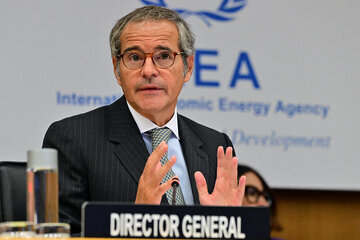
According to Khabaronline, an Iranian news agency, In an interview with Reuters, Grossi referred to U.S. and Israeli military strikes on the Natanz, Fordow, and Isfahan nuclear sites last June, saying the Agency has been able to inspect all declared facilities that were not hit, but still lacks access to three key sites that were damaged. “This situation cannot go on forever, and at some point I may have to declare Iran in non-compliance,” he said.
According to Grossi, the IAEA has asked Iran to clarify the fate of nuclear material at the destroyed sites, including about 440 kilograms of uranium enriched to 60 percent—a level the Agency considers close to the threshold required for weapons use. He added that the lack of clarity over these materials means there is no assurance they have not been moved or concealed.
Tehran has repeatedly stressed that, as an NPT member, it remains committed to its obligations, arguing that Western parties and the United States have undermined agreed inspection arrangements through political approaches and punitive measures, including triggering the snapback mechanism. Iran also says that until a clear framework is established for how to deal with damaged sites, technical access cannot be provided.
In a separate interview with Bloomberg, Grossi said talks on resuming inspections at the damaged facilities are ongoing, and that the Agency’s goal is to return to Natanz, Fordow, and Isfahan due to their “technical and strategic” importance. He noted that most of the destroyed equipment can be repaired or replaced and that nuclear material remains on site—an issue the Agency believes preserves Iran’s potential nuclear capacity.
The IAEA chief emphasized that the diplomatic dimensions of Iran’s nuclear file, as well as indirect talks between Tehran and Washington—particularly those led by U.S. Special Envoy Steve Witkoff—are influencing the Agency’s technical work. He said he hopes these negotiations will help reduce the risk of military escalation in the region.
Grossi also said he may meet Iran’s Foreign Minister, Seyed Abbas Araghchi, in the coming days, adding that diplomatic engagement with Tehran is continuing, although Iran has raised certain conditions and exp ectations.
Your Comment