
Reyhane Hejazi - Following the failure of earlier diplomatic efforts and the effective suspension of dialogue, relations between Tehran and Washington gradually shifted from cold diplomacy to overtly threatening rhetoric. By intensifying sanctions, expanding its military presence in the region, and repeatedly warning that “all options are on the table,” the United States sought to force Iran into accepting its preferred framework—an effort that not only failed, but also highlighted the potentially high costs of confrontation.
The turning point in this tense trajectory came in June, when the United States carried out an attack on one of Iran’s nuclear facilities. Although described as a “limited deterrent action,” the move in practice pushed the region to the brink of a dangerous cycle of retaliation and counter-retaliation. In the aftermath, security alert levels rose, mutual threats became more explicit, and the possibility that the nuclear file could completely slip out of a controlled diplomatic track turned into a realistic scenario.
During the same period, informal attempts to revive earlier negotiations also ran aground. Disagreements over the agenda, the format of talks, and the role of third parties stalled any diplomatic initiative. Washington sought to expand negotiations beyond the nuclear issue and involve regional countries, while Tehran viewed this approach as a red line and assessed it as an attempt to erode its bargaining position.
However, the continuation of threats and the practical experience of limited military action did not alter Tehran’s calculations; instead, they underscored the risks facing Washington. Concerns over unpredictable reactions, pressure from regional allies, internal divisions within the U.S. administration, and the absence of a low-cost pathway to manage the crisis ultimately led the United States to conclude that persisting along this path could spiral out of control.
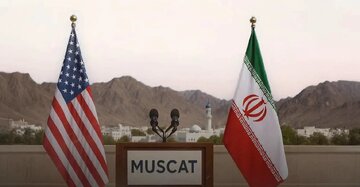
It was in this context that the Muscat talks emerged not as an ideal option, but as an unavoidable solution to contain the crisis—talks that, this time, contrary to Washington’s initial preference, are being held within Iran’s desired framework: a limited nuclear agenda, bilateral and indirect in nature.
What follows is a three-level analysis of how the Muscat negotiations came about, the latest positions of the U.S. administration, and the calculations of Iran’s political system in entering this sensitive phase of diplomacy.
1. The Muscat Talks: Washington’s Tactical Retreat in the Face of Tehran’s Resistance
An examination of the path leading to the Muscat negotiations shows that, in the final hours of Wednesday, the United States accepted the conditions set by Iran for the start of talks—an indication of a shift in the diplomatic balance.
Initially, Washington insisted that negotiations be held in Istanbul, with an agenda extending beyond the nuclear issue and with the participation of regional countries—a proposal that met with Iran’s explicit rejection.
By insisting on limiting the talks strictly to the nuclear file and rejecting any multilateral framework, Tehran prevented the imposition of a non-nuclear agenda.
Ultimately, Washington agreed to hold the negotiations in Muscat in a bilateral, indirect format, focused solely on the nuclear issue.
This diplomatic confrontation demonstrated that, despite public threats, the United States was concerned about the failure to initiate talks and lacked an effective alternative option.
While efforts by some regional countries to prevent the cancellation of negotiations are real, the primary driver is assessed to be Washington’s strategic need for talks and its fear of escalating tensions with Iran.
2. The Latest Positions of the U.S. Administration: Secrecy, Internal Divisions, and Israeli Pressure
A review of Washington’s official positions on the eve of the negotiations points to an effort by the U.S. administration to simultaneously manage public opinion, allied pressure, and internal rifts.
The administration is attempting to portray acceptance of negotiations as the result of insistence by regional countries, in order to conceal its own genuine need for dialogue with Iran.
Washington is under serious pressure from the Israeli regime, and part of its recent hardline rhetoric—particularly from figures such as Marco Rubio—has been aimed at appeasing Tel Aviv.
Donald Trump has announced that he will issue an official statement on the Muscat talks at 7:00 p.m. today, a statement that may reflect an attempt to strike a balance between diplomacy and pressure.
Within Trump’s team, there is a serious divergence of views between the Vance–Witkoff camp and the Rubio team, with the latter effectively moving toward weakening or derailing the negotiations.
Ultimately, concern over the consequences of a direct confrontation with Iran has been the main factor persuading Trump to test the path of negotiation.
3. Iran’s Position: Negotiating from a Position of Strength and Centralized Decision-Making
Iran’s governing establishment views the Muscat negotiations as a fully controlled process, grounded in authority and guided by pre-defined frameworks.
The talks are being held with the highest authorization of the system, and all guidelines have been approved by the Supreme National Security Council.
The red lines of the negotiations have been communicated at the highest levels, and neither the negotiating team nor the government has the authority to go beyond them.
Any decision regarding the acceptance or rejection of issues raised in the talks will be made in Tehran, not at the negotiating table.
Accepting the principle of negotiation is seen less as a sign of concession than as an effort to make a final case before domestic public opinion and to capitalize on Washington’s position of weakness.
Hardline domestic attacks on the negotiations are viewed as contrary to the senior leadership’s approach and, in the event of failure, could shift responsibility onto the governing establishment itself.
The Muscat talks are not born of optimism, but of the intersection of compulsion, calculation, and risk management on both sides. At a time when the United States is grappling with limited options and internal divisions, Iran has entered the dialogue with a clear framework and from a controlled position.
Muscat is less a venue for a final agreement than a testing ground for political will and for gauging the costs of confrontation in one of the most sensitive international dossiers.
Your Comment