
The UN Security Council meeting on Resolution 2231, held in late 2025 despite opposition from Russia and China and at the request of some Western member states, further revealed the rift among the five permanent members over Iran’s nuclear issue.

Russia and China underlined the complete termination of Resolution 2231, the lack of any legal basis for convening the UN Security Council meetings and the UN Secretary-General’s reporting, as well as the snapback mechanism.

In contrast, the UK, France, the United States, and some European members of the UN Security Council stressed the validity and continuation of Resolution 2231, the reinstatement of UN sanctions, and the International Atomic Energy Agency’s (IAEA) access to Iran’s damaged nuclear facilities following attacks by the US and Israel.
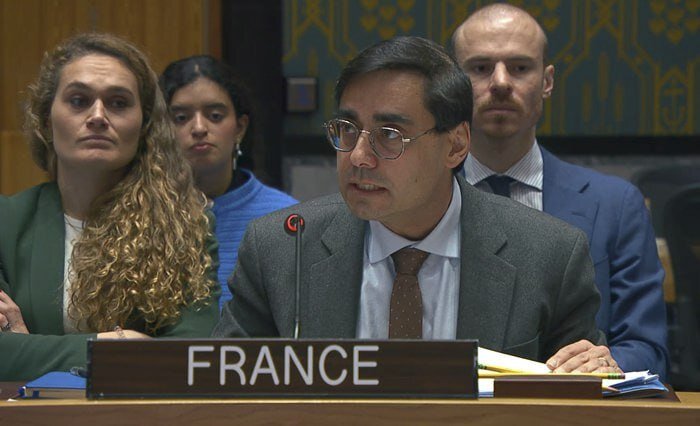
“Security Council resolution 2231 contains a clear, deliberate, and self-executing termination clause. This resolution expired on 18 October 2025,” Iranian Ambassador and Permanent Representative to the UN Amir-Saeid Iravani said addressing the UNSC meeting on Tuesday.
“As of that date, it ceased to have any legal effect or operative mandate. Accordingly, the Security Council’s role under resolution 2231 came to a definitive end,” he added.

“There is therefore no mandate for the Secretary-General to submit any report, no mandate for the Council to hold discussions on it, and no legal basis whatsoever to convene a meeting under the agenda item ‘Non-proliferation’ in this context,” he noted.
Meanwhile, Deputy United States Special Envoy to the Middle East Morgan Ortagus said, “The United States remains available for formal talks with Iran, but only if Tehran is prepared for direct and meaningful dialogue.”
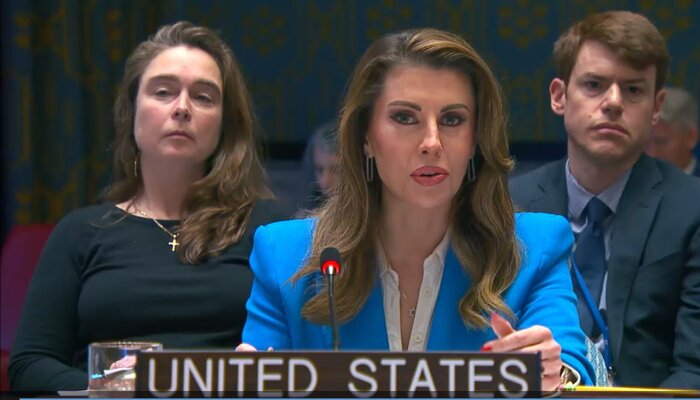
In response to Ortagus’ claims, Iravani said, “We appreciate any fair and meaningful negotiations. However, insisting on a so-called zero-enrichment policy is entirely inconsistent with the rights to which Iran is entitled as a Member of the NPT.”
The disagreement in the UN Security Council over Resolution 2231 is not only political but essentially legal and procedural.
It directly concerns the credibility, integration, and authority of the UNSC and shows that, for the first time, there is a fundamental disagreement among members over the sanction mechanisms under Chapter VII of the UN Charter.
This meeting also served as a warning to the UN Secretariat and member states that this is a fundamental disagreement that cannot be simply passed over or ignored.
Your Comment